by Tim Gordon
The Star Trek Starships That Carried Us Into the Final Frontier
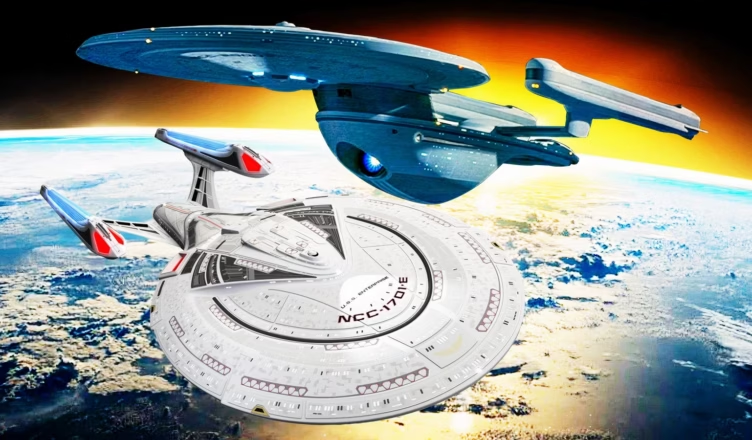
Star Trek Starships are more than transportation.
For sixty years, they have been homes, laboratories, diplomatic outposts, warships, classrooms and symbols of civilizations reaching beyond the boundaries of what they already know.
The Enterprise carried Kirk toward worlds no human had visited.
The Enterprise-D carried families into deep space.
Deep Space Nine needed the Defiant when exploration gave way to war.
Voyager became a piece of the Federation stranded seventy thousand light-years from home.
Discovery crossed not only space, but centuries.
The Cerritos revealed what happens after first contact.
The Protostar introduced a new generation to Starfleet.
Every vessel tells us something about the era that built it.
Look closely at the Star Trek Starships, and the history of the Federation begins appearing in their hulls.
Early ships are experimental.
Later vessels become enormous.
War produces tougher ships.
Isolation demands self-sufficiency.
The distant future transforms the very assumptions of starship design.
These ships don’t merely carry Star Trek’s characters through the universe.
They show us how the universe has changed.

Enterprise NX-01 | Before Starfleet Knew What It Was Doing
The Enterprise NX-01 represents humanity before the Federation became an institution.
Jonathan Archer’s ship launched in 2151, carrying humans farther into deep space than they had routinely traveled before.
It lacked many technologies later generations would take for granted.
There were no defensive shields in the familiar Starfleet sense.
Transporters existed, but people remained understandably hesitant about using them.
The ship’s Warp 5 engine represented a technological breakthrough rather than standard equipment.
The NX-01 therefore feels different from later Enterprises because it should.
Humanity is learning.
So is Starfleet.
Every encounter can become a first contact because almost everything is new.
That makes the NX-01 one of the most important Star Trek Starships. It represents the moment exploration stops being an aspiration and becomes a sustained human endeavor.
The Federation doesn’t exist yet.
But one of the vessels that will help make it possible already does.
USS Enterprise NCC-1701 | The Ship That Defined the Future
Then came the silhouette that changed science fiction.
A saucer.
Two nacelles.
A secondary hull.
The USS Enterprise NCC-1701 didn’t resemble a rocket or flying saucer in the conventional sense. Matt Jefferies’ design suggested something built according to engineering principles belonging to a future audiences had never seen.
But the Enterprise became iconic because of what happened aboard it.
Under Christopher Pike and later James T. Kirk, the Constitution-class vessel became Starfleet’s great explorer.
Its mission was scientific.
Diplomatic.
Humanitarian.
And, when necessary, defensive.
That combination became essential to the franchise.
The Enterprise carried weapons, but it wasn’t fundamentally designed around conquest.
It carried laboratories because discovery mattered.
It carried diplomats because conversation mattered.
It carried hundreds of people because exploration was a collective enterprise.
By the time Kirk ordered the ship into another unknown region of space, audiences understood what the Enterprise represented.
Possibility.
The Enterprise Line | One Name, Many Futures
The Enterprise became so important that Starfleet kept bringing the name back.
NCC-1701-A continued Kirk’s era.
Enterprise-B connected one generation to another.
Enterprise-C became remembered for sacrifice.
Enterprise-D transformed the starship into something closer to a traveling community.
Enterprise-E reflected a Federation entering a more dangerous period.
Enterprise-F extended the lineage.
Enterprise-G placed Seven of Nine in the center chair and opened another chapter.
We explored that inheritance more deeply in The Enterprise Legacy, because these vessels deserve to be understood as something larger than individual designs.
But within the history of Star Trek Starships, the Enterprise lineage demonstrates how ships can become cultural memory.
Starfleet doesn’t keep using the name because it lacks imagination.
It uses the name because Enterprise means something.
Enterprise-D | A City Among the Stars
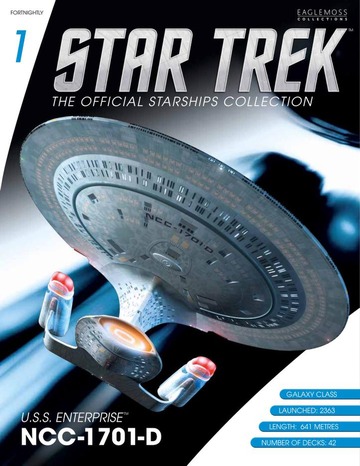
The Galaxy-class Enterprise-D represents perhaps the most confident version of the Federation ever depicted.
It is enormous.
Its crew doesn’t travel alone.
Families live aboard.
Children attend school.
Civilians work there.
Ten Forward gives the ship a social center.
Holodecks provide recreation.
Scientific facilities allow specialists to study almost anything the Enterprise encounters.
This is not a civilization cautiously stepping into space.
This is a civilization comfortable enough with exploration to bring its families along.
That tells us something profound about the Federation of The Next Generation.
Deep space has become not merely somewhere Starfleet visits.
It has become somewhere people can live.
The Enterprise-D is therefore more than Picard’s flagship.
It is the Federation’s confidence given physical form.
USS Defiant | When Exploration Wasn’t Enough
Then Deep Space Nine changed the equation.
The Federation encountered the Dominion.
And Starfleet needed something different.
The USS Defiant was originally developed as a response to the Borg threat and represented an extraordinary departure from traditional Starfleet design. Compact, heavily armed and built primarily for combat, the Defiant was essentially a warship in a fleet that preferred to call its vessels explorers.
That distinction matters.
The Defiant tells us something about what was happening to the Federation.
Optimism had encountered enemies diplomacy couldn’t easily stop.
The ship didn’t contain families.
It wasn’t built around luxurious exploration.
It existed because sometimes the Federation had to survive long enough to continue believing in its principles.
Under Benjamin Sisko, the Defiant became indispensable during the Dominion War.
The contrast with Picard’s Enterprise-D couldn’t be sharper.
One ship represents Federation confidence.
The other represents Federation survival.
Both are Starfleet.
USS Voyager | A Starship Becomes a Lifeboat
Voyager was never supposed to spend seven years in the Delta Quadrant.
The Intrepid-class starship was technologically sophisticated, equipped with innovations including bio-neural circuitry and variable-geometry warp nacelles.
Then everything changed.
Stranded roughly seventy thousand light-years from Federation space, Voyager became something its designers couldn’t have anticipated.
Home.
There would be no nearby starbase for repairs.
No Federation reinforcements.
No replacement crew.
No dependable supply chain.
Every photon torpedo mattered.
Every shuttle mattered.
Every damaged system created a new calculation.
The official Star Trek history of 24th-century Federation vessels notes that Voyager combined its advanced Starfleet technology with adaptations developed during its journey, including an enhanced astrometrics laboratory and the Delta Flyer.
Voyager therefore becomes one of the most fascinating Star Trek Starships because we watch it evolve.
The ship that returns to Earth isn’t quite the ship that left.
Neither is its crew.
Deep Space Nine | The Starship That Didn’t Move
Technically, Deep Space Nine isn’t a starship.
That’s precisely why it belongs in this conversation.
The former Cardassian mining station Terok Nor completely changed the geography of Star Trek.
For decades, the franchise had been built around ships traveling toward problems.
Deep Space Nine forced the problems to come to the characters.
The station remained near Bajor and the newly discovered wormhole connecting the Alpha and Gamma Quadrants.
Ships arrived.
Refugees arrived.
Diplomats arrived.
Merchants arrived.
Enemies arrived.
Nobody could simply warp away when the episode ended.
That changed the storytelling.
Deep Space Nine became a port city in space, a cultural crossroads where Federation, Bajoran, Cardassian, Ferengi, Klingon and eventually Dominion interests collided.
The station proves that the importance of a vessel or structure isn’t measured by how far it travels.
Sometimes history comes to you.




USS Discovery | Traveling Through Space Differently
The Crossfield-class USS Discovery introduced one of the franchise’s most radical propulsion systems.
The displacement-activated spore hub drive allowed Discovery to travel through the mycelial network, effectively jumping across enormous distances almost instantaneously.
The technology made the ship unique.
Then Discovery became even stranger.
The vessel traveled more than nine hundred years into the future.
Suddenly, a 23rd-century experimental starship existed in the 32nd century.
Its subsequent refit introduced technology that would have seemed impossible to its original crew, including programmable matter and detached nacelles.
This makes Discovery one of the rare Star Trek Starships whose physical evolution reflects the franchise’s enormous timeline.
The ship becomes a bridge between eras.
Its hull carries the past.
Its technology absorbs the future.
And its crew learns to live between both.
USS Cerritos | The Federation After First Contact
Not every Starfleet vessel is the flagship.
Lower Decks understands how interesting that fact can be.
The California-class USS Cerritos specializes in second-contact missions and support operations.
The Enterprise might arrive dramatically, establish relations with a civilization and continue toward its next adventure.
Someone has to come afterward.
Infrastructure has to be established.
Diplomatic relationships have to be maintained.
Technical support has to happen.
The Cerritos lives in that space.
Its mission expands our understanding of Starfleet because civilizations aren’t built exclusively through historic first encounters.
They’re built through follow-up.
Paperwork.
Maintenance.
Logistics.
Relationships.
The Cerritos is the Federation after the inspirational speech.
And that makes it surprisingly important.
USS Protostar | Starfleet as an Invitation
The Protostar approaches the Starfleet vessel from another direction.
Its young crew doesn’t begin as a conventional collection of Academy-trained officers.
Many of them encounter Starfleet as an idea before they understand it as an institution.
The experimental vessel gives them access to that world.
Its proto-drive allows extraordinary travel.
A holographic Kathryn Janeway provides guidance.
But the ship’s greater purpose within Prodigy is almost educational.
The Protostar becomes a classroom.
Its crew learns what Starfleet represents by trying to live according to its ideals.
That gives the vessel a distinctive place among the Star Trek Starships.
Most Starfleet ships carry officers into the unknown.
The Protostar carries outsiders toward Starfleet.
The Runabout | Sometimes You Don’t Need a Starship
Deep Space Nine also introduced another important idea.
Sometimes a shuttle isn’t enough.
But an Enterprise is too much.
Enter the Danube-class runabout.
Larger and more capable than traditional shuttlecraft, runabouts gave Deep Space Nine personnel the ability to undertake longer missions without requiring a full starship.
They weren’t glamorous.
That was part of their appeal.
The runabout made Starfleet feel operational.
People needed practical ways to move through space.
Not every mission required a legendary registry number.
Sometimes you just needed transportation that could survive the trip.
The Shuttlecraft | The Workhorses of Starfleet
Galileo.
Delta Flyer.
Type 6.
Type 9.
Across generations, shuttlecraft have quietly done enormous amounts of work.
They carry away teams.
They conduct surveys.
They rescue stranded officers.
They crash with suspicious frequency.
And they remind us that the gigantic starships dominating Star Trek’s imagery depend upon much smaller craft for everyday operations.
Voyager’s Delta Flyer elevated that idea further.
Designed and built by the crew to survive the particular hazards of the Delta Quadrant, it became another example of Starfleet engineering adapting to circumstances its designers never anticipated.
The Federation doesn’t explore with one kind of vessel.
It builds an ecosystem of them.
Klingon Ships | Power Made Visible
Starfleet isn’t the only civilization whose philosophy can be read through its ships.
Klingon vessels communicate power immediately.
The Bird-of-Prey became one of the franchise’s most recognizable designs, combining predatory geometry with a cloaking device that made the vessel even more dangerous.
The larger battle cruisers and attack cruisers reinforce the same cultural message.
Klingon ships are built by a civilization where military strength, honor and martial tradition remain central to identity.
Their designs don’t need to resemble Starfleet.
They shouldn’t.
The ships tell us who built them before anyone speaks.
Romulan Warbirds | Intimidation at Scale
Romulan vessels operate differently.
Where Klingon ships often suggest aggression, Romulan designs suggest menace.
The enormous D’deridex-class Warbird introduced in The Next Generation could dwarf the Enterprise-D.
That scale was psychological as much as tactical.
Romulan power relied heavily upon secrecy, intelligence and strategic intimidation.
Then there was the cloaking device.
A ship capable of disappearing forces its opponent to think differently.
The threat isn’t simply what can be seen.
It is what might already be there.
Borg Cubes | Design Without Individuality
Then there is the Borg Cube.
No saucer.
No nacelles.
No apparent bridge.
No recognizable front.
No concern for elegance.
A cube.
The design tells us almost everything we need to know about the Borg before they explain themselves.
Individuality doesn’t matter.
Hierarchy as other civilizations understand it doesn’t matter.
Aesthetic expression doesn’t matter.
The vessel is collective function rendered at enormous scale.
That makes the Borg Cube one of the most effective starship designs in science fiction.
It doesn’t merely look alien.
It rejects the assumptions underlying almost every ship around it.
Starship Design Is Worldbuilding
The greatest Star Trek Starships communicate before anyone aboard them speaks.
Starfleet vessels share visual DNA because they belong to the same institution.
Klingon ships communicate martial culture.
Romulan ships project secrecy and intimidation.
Cardassian vessels reflect another design language.
Ferengi ships communicate something different again.
Borg vessels abandon familiar concepts almost entirely.
This is why starship design matters so much to Star Trek.
A ship isn’t simply somewhere characters stand while dialogue happens.
It is architecture.
Technology.
Politics.
History.
Culture.
Sometimes ideology.
The official Star Trek Ships archive demonstrates just how deeply vessels from across the franchise have become characters and historical markers in their own right.
From Models to Digital Worlds
The ships themselves have also documented the evolution of television production.
The original Enterprise existed as a physical studio model.
Motion-control photography transformed the ships of the feature films.
The Next Generation combined increasingly sophisticated model work with visual effects techniques that made starships feel larger and more dynamic.
Computer-generated imagery eventually transformed what television could depict.
Deep Space Nine could stage enormous Dominion War fleet battles.
Voyager could encounter increasingly elaborate alien vessels.
Enterprise could portray the NX-01 moving through space with a freedom earlier television productions couldn’t easily achieve.
Modern Star Trek has expanded the canvas again.
Discovery can jump through the mycelial network.
The Enterprise can maneuver through enormous cinematic environments.
Fleet sequences can contain levels of detail once reserved for theatrical films.
The technology used to create the ships keeps evolving.
Just like the ships themselves.
Every Era Builds the Ship It Needs
This may be the most revealing thing about the Star Trek Starships.
They aren’t interchangeable.
Archer needs the NX-01 because humanity is beginning.
Kirk needs the Constitution-class Enterprise because exploration is becoming Starfleet’s identity.
Picard needs the Enterprise-D because the Federation is confident enough to bring civilization with it.
Sisko needs the Defiant because the Federation is at war.
Janeway needs Voyager because survival requires adaptability.
Burnham needs Discovery because her story eventually spans centuries.
Freeman needs the Cerritos because the Federation’s ordinary work matters too.
The young crew of Prodigy needs the Protostar because Starfleet is something they must first discover.
The ship changes because the mission changes.
And the mission changes because the Federation changes.
The Ships Carry the Dream
There is a reason Star Trek so often begins with a ship moving through space.
Before anyone speaks, we understand the invitation.
Come aboard.
There is somewhere to go.
Something to discover.
Someone to meet.
The Star Trek Starships have carried that invitation for sixty years.
Some explored.
Some fought.
Some became homes.
Some crossed centuries.
Some carried the Federation into places where it barely existed.
And some carried people toward the very idea of Starfleet itself.
Their hulls change.
Their technology evolves.
Their registry numbers become history.
But the fundamental purpose remains.
A starship is a machine built to cross distance.
Star Trek transformed it into something more.
A way to imagine what might be waiting when we get there.
Continue the Voyage
← Previous: The Crews That Made Star Trek
Explore the Hub: Star Trek 60 | Celebrating 60 Years of the Final Frontier
Upcoming → 60 Years. Thirteen Series. One Continuing Mission. | September 7
TheFilmGordon’s Star Trek 60 celebration continues throughout September with new stories exploring the voyages, captains, crews, starships, worlds, adversaries and ideas that have shaped the Final Frontier.
Discover more from FilmGordon
Subscribe to get the latest posts sent to your email.