by Tim Gordon
The Burn and Rebirth of the Federation became one of Star Trek: Discovery’s boldest examinations of whether the future could survive catastrophe and still be rebuilt.
For generations, the Federation represented one of Star Trek’s most enduring promises: civilizations separated by culture, history and biology could choose cooperation over conquest.
Then came the Burn.
In the 32nd century, the institution that had survived wars, the Borg, political upheaval and centuries of change was scattered across the galaxy. Member worlds had withdrawn. Starfleet’s reach had contracted. The future once imagined as an expanding community had become a collection of isolated worlds.
But Star Trek: Discovery wasn’t interested only in showing us how the Federation fell.
It wanted to know whether the Federation could be built again.
The Burn Broke More Than Starfleet
For centuries, warp travel had made the Federation possible.
Starships connected worlds. Trade moved between systems. Starfleet carried diplomats, scientists and explorers across enormous distances. Federation membership meant becoming part of something larger because those connections could actually be maintained.
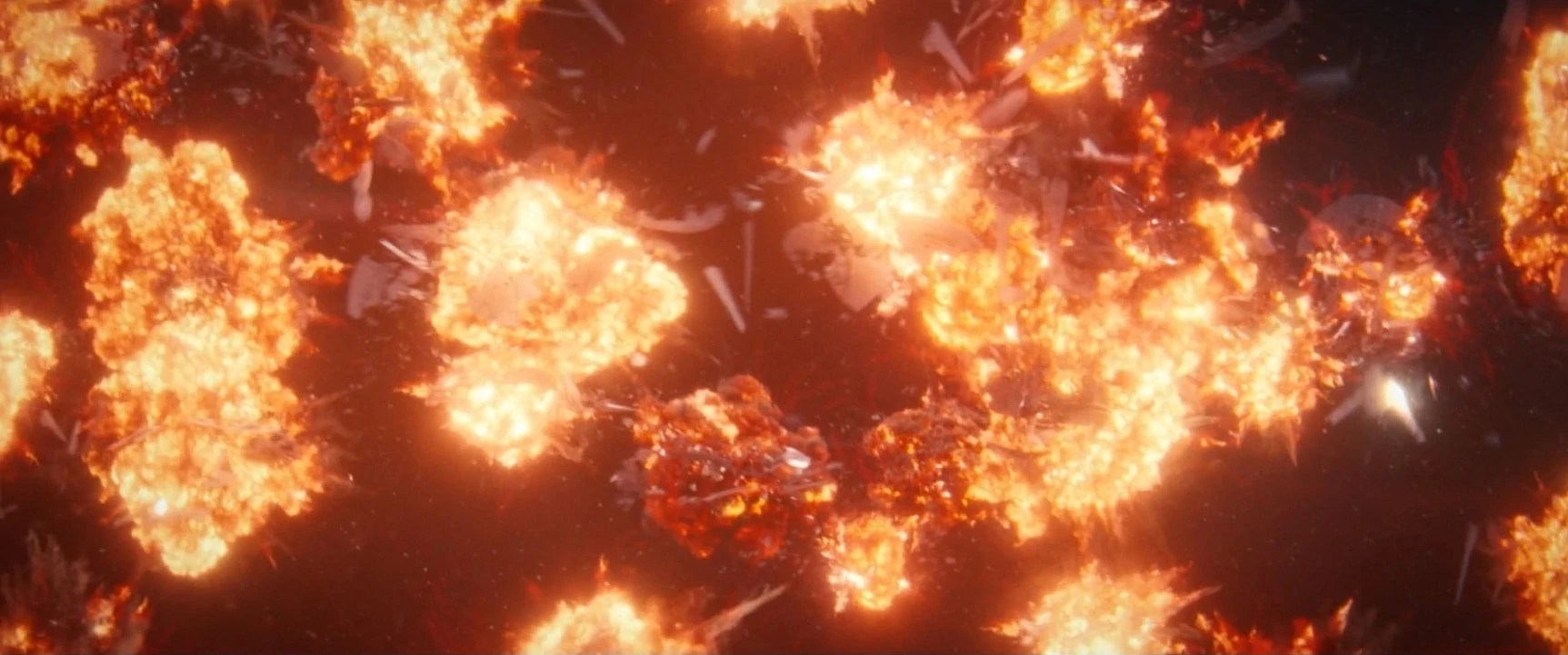
Then, in the 31st century, most of the galaxy’s dilithium suddenly became inert.
Thousands of active warp cores detonated.
Starships were destroyed.
The Burn and Rebirth of the Federation begins with that rupture, when the infrastructure connecting thousands of worlds suddenly became a source of fear rather than possibility.
Millions died.
The event became known simply as the Burn.
Its consequences weren’t limited to the ships lost in the catastrophe. With dilithium scarce and warp travel severely constrained, the infrastructure connecting distant civilizations began collapsing.
The Federation shrank.
Starfleet retreated.
Earth eventually withdrew.
Ni’Var, the world once known as Vulcan and now shared by Vulcans and Romulans, had also left.
By the time the USS Discovery arrived from the 23rd century, the Federation still existed, but much of the galaxy no longer experienced it as the confident institution audiences had known.
The Burn hadn’t destroyed the Federation in one moment.
It had made staying together increasingly difficult.
That fractured future became the new setting for the official Star Trek: Discovery series, as the USS Discovery and its crew confronted a Federation struggling to reconnect the galaxy.
Discovery Arrived Carrying a Memory of What Had Been Lost
The USS Discovery was technologically extraordinary in the 32nd century because its spore drive could travel without conventional warp.
But the crew brought something equally valuable.
Memory.
Michael Burnham, Saru, Paul Stamets, Hugh Culber, Sylvia Tilly and their shipmates remembered a Federation that wasn’t an artifact of history.
It was home.
That makes The Burn and Rebirth of the Federation more than a story about restoring warp travel. It becomes a story about preserving an idea after the institutions built around it have nearly disappeared.
They had lived inside its institutions. They had served under its flag. They had sacrificed their place in time partly to protect the future that Federation represented.
Now they had reached that future and found people who weren’t certain the institution still mattered.
That reversal became one of Discovery’s most interesting ideas.
The crew members were displaced by nearly a thousand years, yet they sometimes understood the Federation’s original purpose more intimately than the people who had inherited it.
Their presence couldn’t restore the Federation by itself.
But it could remind people why it had existed.
The Federation Had to Earn Its Members Back
Rebuilding couldn’t simply mean recreating the past.
The worlds that had left the Federation had reasons.
They had survived without it.
They had developed new political relationships, new priorities and new identities. Centuries of Federation history didn’t automatically entitle Starfleet to their allegiance.
Ni’Var became one of the clearest examples.
The reunification of Vulcans and Romulans represented the fulfillment of a dream associated with Spock, but the society that emerged had its own complicated relationship with the Federation.
Burnham’s connection to Spock gave the encounter extraordinary historical weight.
She came from a century when her brother’s dream was still unfinished.
Now she stood on a world where it had become reality.
But history wasn’t enough.
Ni’Var had to decide whether the Federation of the 32nd century deserved its trust.
Earth faced a similar question.
The Burn and Rebirth of the Federation therefore depends on something Starfleet cannot accomplish with technology alone: convincing worlds that cooperation is once again worth choosing.
The birthplace of the Federation had learned to survive independently, turning inward after generations of uncertainty.
Reconnection therefore required something more difficult than diplomacy.
It required trust without entitlement.
The Federation couldn’t merely tell former members what they once meant to one another.
It had to demonstrate what they could mean to one another again.
Solving the Burn Made Rebirth Possible
Understanding what caused the Burn became one of Discovery’s central missions.
The answer ultimately led to Su’Kal, a Kelpien who had spent most of his life isolated on a dilithium-rich planet.
His connection to the catastrophe made the Burn something unexpected.
It wasn’t an invasion.
It wasn’t a weapon.
It wasn’t the calculated destruction of the Federation by an enemy.
It emerged from trauma, isolation and an extraordinary biological relationship with dilithium.
That revelation gives The Burn and Rebirth of the Federation an unexpectedly human center: one individual’s isolation helped fracture a galaxy, while reconnection becomes essential to healing it.
That revelation gave the larger story an almost poetic symmetry.
The Federation had been fractured by an event born from profound isolation.
Its recovery would depend upon restoring connection.
Once a new source of dilithium became available, starships could travel more freely again. Federation worlds could reconnect. Starfleet could expand its reach.
But fuel could only restore transportation.
It couldn’t restore belief.
That work had to happen one relationship at a time.
Rebirth Meant Choosing the Federation Again
The Federation’s recovery mattered because it wasn’t presented simply as restoration.
The goal wasn’t to rewind history.
The galaxy had changed.
The Federation had changed.
Even the USS Discovery changed, receiving a 32nd-century refit that transformed the vessel while preserving the ship beneath it.
In that sense, The Burn and Rebirth of the Federation mirrors the transformation of the Discovery itself, preserving what mattered from the past while adapting to the realities of a radically different future.
That became an elegant metaphor for the institution itself.
The Federation couldn’t survive by pretending nothing had happened.
It had to adapt without forgetting what made it worth preserving.
Under President Laira Rillak, the rebuilding Federation increasingly represented that balance. Diplomacy returned to the center of its mission. Former members reconsidered their relationships. Exploration again became possible beyond the immediate demands of survival.
Ni’Var returned.
Earth’s relationship with the Federation evolved.
Connections that once seemed permanent became meaningful precisely because they now had to be chosen again.
That distinction matters.
A Federation held together merely by history is an inheritance.
A Federation whose members continue choosing cooperation is an idea still alive.
The Federation Survived Because Its Idea Survived
Across sixty years, Star Trek has repeatedly changed the conditions surrounding the Federation.
Seen across the larger Star Trek canon, The Burn and Rebirth of the Federation completes an institutional journey that earlier series had been building for decades.
The Next Generation showed it in an era of confidence.
Deep Space Nine placed it under the pressure of war.
Voyager asked whether its principles could survive far beyond its borders.
Discovery went further.
It imagined a future where the Federation had already lost much of what once made it powerful.
And then it asked whether anyone would choose to rebuild it.
That may be the deeper meaning of the Burn and Rebirth of the Federation.
Institutions aren’t immortal.
They can weaken.
They can lose trust.
They can become disconnected from the people they were created to serve.
What survives is the possibility that people can decide their underlying principles are still worth pursuing.
The USS Discovery didn’t restore the Federation by bringing the past into the future unchanged.
Its crew helped the future remember something it had nearly lost.
Civilizations didn’t have to face the galaxy alone.
Distance didn’t have to become isolation.
Difference didn’t have to become division.
And history didn’t have to determine what came next.
The Burn nearly severed the connections holding the Federation together.
Its rebirth began when worlds chose to make those connections again.
The Federation survived because, even after everything else had fractured, the idea of building a future together was still worth rebuilding.
Continue the Voyage
← Previous: Burnham & Saru: The Heart of Discovery
Explore the Hub: Star Trek 60 | Celebrating 60 Years of the Final Frontier
Upcoming → Short Treks: Small Stories Across a Vast Universe | September 18
TheFilmGordon’s Star Trek 60 celebration continues throughout September with new stories exploring the voyages, captains, crews, starships, worlds, adversaries and ideas that have shaped the Final Frontier.
Discover more from FilmGordon
Subscribe to get the latest posts sent to your email.