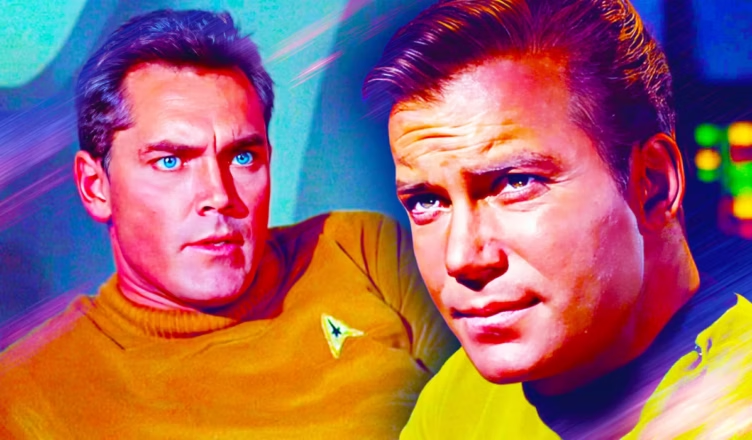
by Tim Gordon
Pike to Kirk: When the Enterprise Changes Hands
Pike to Kirk, command of the USS Enterprise represents more than one captain replacing another. Before James T. Kirk became synonymous with the legendary starship, the Enterprise already had a history. Robert April had commanded her. Christopher Pike had taken her into the unknown. Spock had already stood at a science station on her bridge. Officers had lived, served and sacrificed aboard her long before Kirk sat in the center chair and began the five-year mission that introduced Star Trek to the world.
That history has become increasingly important as Star Trek: Strange New Worlds expands the years preceding The Original Series. Kirk no longer feels like the man who simply arrives at the beginning of the story. He is becoming the next caretaker of something already in motion. The Enterprise does not begin with Kirk. Kirk inherits the Enterprise.
Explore Star Trek: Strange New Worlds
Read The Enterprise Legacy
Explore The Captains of Star Trek
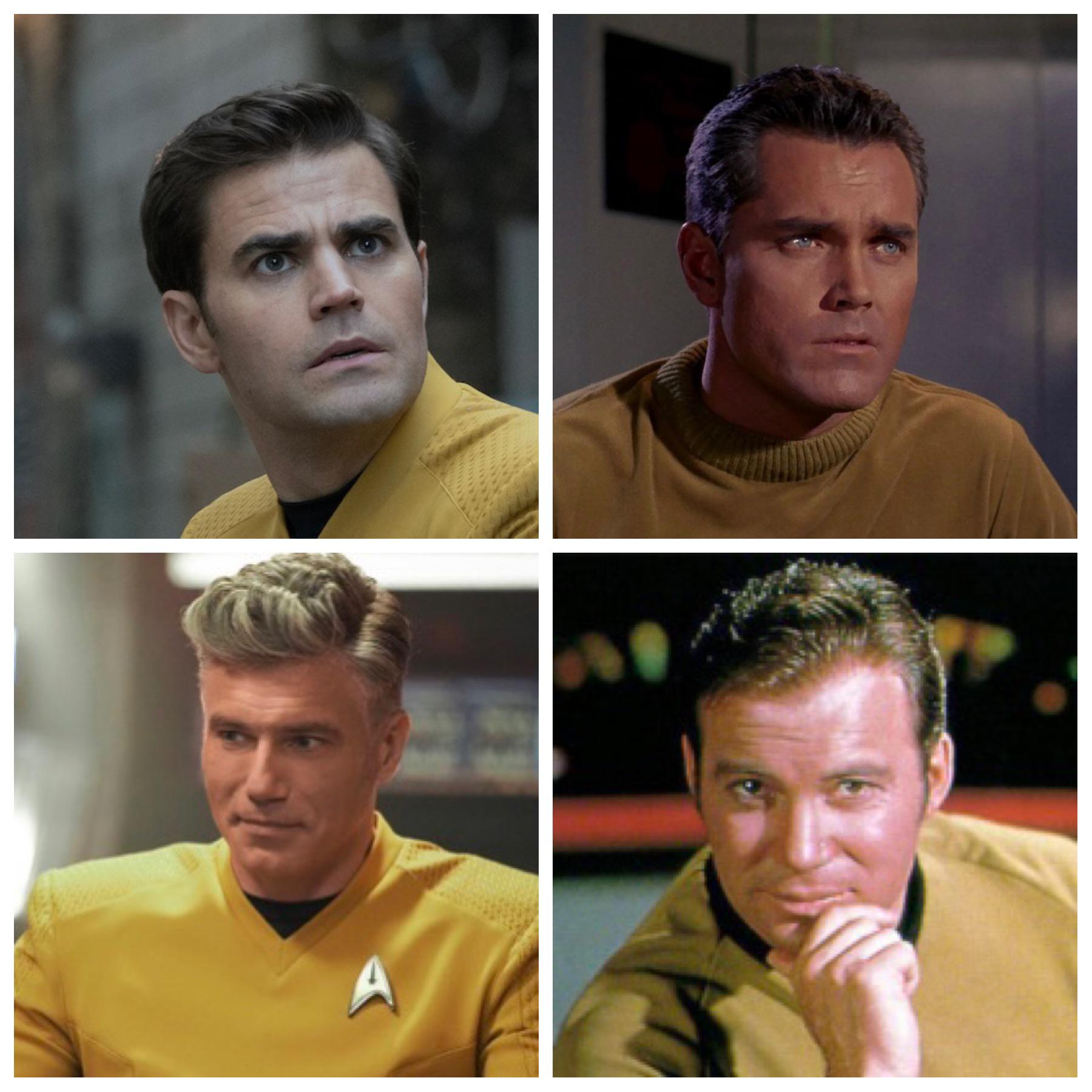
Pike to Kirk is about more than one captain leaving and another taking his chair. It represents one of Star Trek’s defining ideas about command: leadership is temporary, but what a leader builds can survive long after that person is gone. Pike’s Enterprise is shaped by his temperament. He listens. He gathers his officers around a table, cooks for them and creates a command environment built as much around trust and conversation as hierarchy. His crew doesn’t simply follow him because Starfleet regulations say they should. They believe in him because he has invested in them.
James Kirk is different. Even before taking command of the Enterprise, the younger officer possesses the instincts that will eventually define him. He is curious, confident and willing to move toward a problem rather than wait for it to come to him. Strange New Worlds allows those qualities to emerge without prematurely turning him into the captain audiences already know.
He is still learning, still serving beneath other commanders and still discovering what kind of leader he will become. The captain who will eventually confront Romulans, Klingons, Khan Noonien Singh, mysterious machines and civilizations beyond Federation space is being shaped by experiences that occur before the five-year mission. The center chair may eventually belong to him, but first he has to become the man who can occupy it.
The journey from Pike to Kirk extends beyond the captain’s chair because perhaps the most important inheritance connecting the two men is Spock. His relationship with Pike predates his legendary partnership with Kirk, giving the Vulcan science officer a history that fundamentally changes how we understand the original Enterprise. Pike knows a younger Spock still negotiating the boundaries between Vulcan discipline and human emotion.
He also sees an officer whose relationships with T’Pring and Christine Chapel expose vulnerabilities the older Spock will eventually guard more carefully. By the time Kirk assumes command, Spock will already have been tested by another captain, another crew and another version of himself. Kirk doesn’t create the Spock we know. He inherits a man Pike helped shape.
The same is true of the ship around them. Nyota Uhura begins her journey under Pike. Christine Chapel and Joseph M’Benga serve aboard his Enterprise. Montgomery Scott enters the ship’s history before Kirk’s famous voyages begin. Their eventual presence beside Kirk connects two generations of the same vessel, transforming The Original Series crew from a group that seemingly assembled at the beginning of Star Trek into officers whose paths converged over time.
Yet not everyone aboard Pike’s Enterprise is destined to remain. Una Chin-Riley, La’An Noonien-Singh and Erica Ortegas belong deeply to this earlier chapter of the ship’s history. Their absence from the bridge audiences first saw in 1966 creates questions Strange New Worlds must eventually confront, but their importance shouldn’t be measured by whether they remain when Kirk arrives. Their lives reveal something the larger franchise has increasingly embraced: the history audiences know is only part of the history these characters lived. Starfleet existed before the camera found it, and so did the Enterprise.
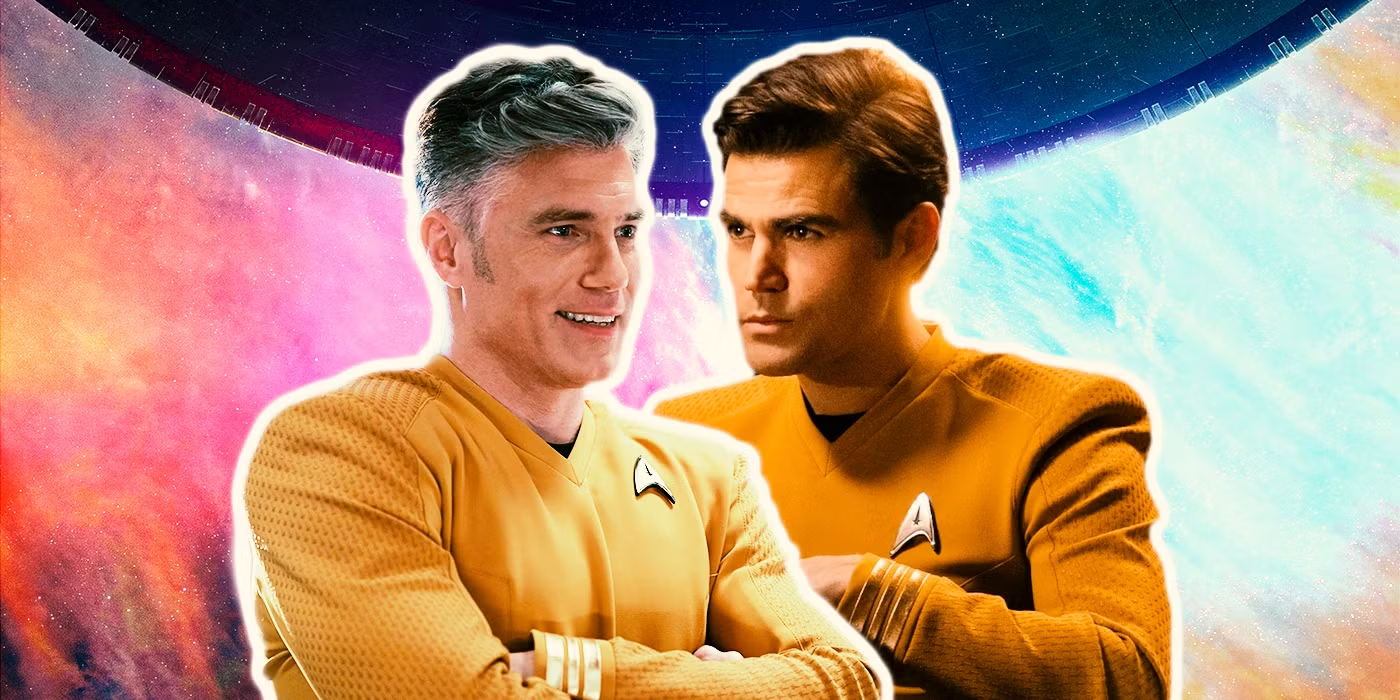
That makes the eventual change of command unusually powerful. Pike knows his future in a way few people ever could. He has seen the accident that will transform his life, and he understands that his time aboard the Enterprise has an ending. Kirk, meanwhile, represents a future Pike cannot fully see. One man knows he must eventually leave. The other doesn’t yet understand everything he is about to inherit. Between them sits the captain’s chair, but the chair isn’t the legacy. The people, the culture and the ship are.
Every captain leaves fingerprints on the command that follows. April helped establish the Enterprise. Pike gives the ship another identity. Kirk will take it into the voyages that make NCC-1701 legendary. Later captains and later ships carrying the name will inherit that history again, from Harriman and Garrett to Picard and the generations that follow. The passage from Pike to Kirk resonates beyond Strange New Worlds because it reveals that the Enterprise has never belonged entirely to one captain. Each commander receives the ship for a moment, adds something to its story and eventually gives way to someone else.
For viewers who first encountered Star Trek through William Shatner’s Kirk, the bridge of the original Enterprise once looked like the beginning. The captain sat in the center. Spock stood beside him. Uhura worked communications. Scotty kept the engines running. Somewhere beyond the viewscreen waited another unexplored world. Sixty years later, that same bridge looks different because we can now imagine the footsteps that came before Kirk walked onto it. Pike sat in that chair. Una stood at his side. Spock learned there. Uhura found her direction there. Chapel, M’Benga, Ortegas and La’An helped shape a chapter of the ship’s history that audiences originally never knew existed.
When Kirk finally takes command, then, he won’t be starting the story. He will be inheriting the relationships, traditions and history of a ship that has already crossed the stars under other captains. Pike’s departure doesn’t erase what came before, just as Kirk’s arrival doesn’t diminish it. One voyage flows into another, and the Enterprise becomes something larger than any individual who occupies its center chair.
For 60 years, audiences have known what happens after James T. Kirk takes command of NCC-1701. Strange New Worlds has made what happened before him matter just as much.
Kirk will inherit the Enterprise. But Pike will have helped make it the ship Kirk inherits.
Continue the Voyage
← Previous: Strange New Worlds: The Enterprise Before Kirk
Explore the Hub: Star Trek 60 | Celebrating 60 Years of the Final Frontier
Upcoming → Starfleet Academy: The Future Begins Again | September 23
TheFilmGordon’s Star Trek 60 celebration continues throughout September with new stories exploring the voyages, captains, crews, starships, worlds, adversaries and ideas that have shaped the Final Frontier.
Discover more from FilmGordon
Subscribe to get the latest posts sent to your email.