by Tim Gordon
Star Trek: Discovery began by looking backward, placing Michael Burnham and the USS Discovery in the years before Kirk’s Enterprise. But its defining transformation came when the series leapt nearly a millennium forward and discovered something almost unimaginable.
The Federation was still there.
But the future Star Trek had spent decades building had fractured.
Discovery would have to help put it back together.
Discovery Began With a Different Kind of Starfleet Journey
When Discovery premiered in 2017, it returned Star Trek to television with a protagonist unlike any who had previously anchored a series.
Michael Burnham wasn’t introduced as captain.
She was Commander Burnham, first officer of the USS Shenzhou, a human raised on Vulcan by Sarek and Amanda Grayson after losing her parents. Her upbringing placed her between cultures, carrying Vulcan discipline alongside emotions she had learned to suppress.
Then she made a catastrophic decision.
Burnham’s actions during the confrontation with the Klingons led to mutiny, war and imprisonment. Rather than beginning with a captain confidently leading a crew into the unknown, Star Trek: Discovery began with an officer who had fallen from Starfleet and had to determine whether she could find her way back.
That journey brought her aboard the USS Discovery, where experimental technology was changing what a starship could do.
The spore drive allowed Discovery to travel through the mycelial network, crossing extraordinary distances almost instantaneously. But the ship’s technological possibilities were accompanied by moral questions, particularly under Captain Gabriel Lorca, whose command gradually revealed something darker beneath the surface.
Discovery wasn’t simply exploring space.
It was exploring what happened when people, institutions and even Starfleet itself lost their way.
The official Star Trek: Discovery series archive chronicles the USS Discovery’s five-season journey from the Klingon War to its extraordinary mission in the 32nd century.

Burnham and Saru Became the Heart of Discovery
At the emotional center of the series was the evolving relationship between Michael Burnham and Saru.
They began as rivals aboard the Shenzhou. Burnham’s confidence frequently collided with Saru’s caution, while Saru’s instinct for danger could frustrate someone trained to suppress fear.
But catastrophe changed them.
The loss of Captain Philippa Georgiou, the Klingon War and their service aboard Discovery forced both characters to evolve beyond the officers they had been.
Saru confronted the fear that had shaped his entire species. Burnham learned that logic alone couldn’t protect her from grief, guilt or responsibility.
Their paths repeatedly crossed the center chair.
Saru became captain before Burnham did, demonstrating that the Kelpien who had once defined himself through fear could become the person responsible for leading others through uncertainty. Burnham’s path took longer because command required something different from her.
She had to stop proving she belonged.
She had to learn how to lead.
Their relationship gradually became something richer than rivalry. They challenged each other, protected each other and ultimately developed the kind of trust that could survive disagreement.
When Discovery eventually crossed into an unknown future, that bond became one of the emotional anchors holding its displaced crew together.
Discovery Jumped Into a Future Without the Federation It Remembered
The boldest decision Star Trek: Discovery made came at the end of its second season.
To prevent the artificial intelligence Control from obtaining data that could threaten all sentient life, Burnham led Discovery through a wormhole into the 32nd century.
The crew left everything behind.
Their families.
Their century.
Their Starfleet.
Their Federation.
When they arrived more than 900 years later, they discovered that the institution they had sacrificed everything to protect had been devastated by an event known as the Burn.
Dilithium across the galaxy had suddenly become inert, destroying countless warp-capable ships and making interstellar travel extraordinarily difficult. Without reliable transportation, Federation worlds became isolated.
The great interstellar civilization had contracted.
Earth had withdrawn.
Former members had gone their own way.
Starfleet survived, but the Federation was a shadow of what Discovery’s crew remembered.
The situation inverted Voyager’s central idea.
Voyager carried the Federation through isolation while trying to return home.
Discovery reached the future and discovered that the Federation itself had become isolated.
Rebuilding the Federation Required More Than Technology
The USS Discovery arrived with something the 32nd century desperately needed.
Its spore drive.
A starship capable of traveling enormous distances without conventional warp immediately became strategically valuable.
But Star Trek: Discovery understood that technology alone couldn’t rebuild the Federation.
The deeper problem was trust.
The Federation had once connected civilizations through shared principles, diplomacy and exploration. After the Burn, many worlds had learned to survive without it.
They couldn’t simply be ordered back.
They had to believe in the idea again.
That placed Discovery’s crew in an unusual position.
They were living artifacts of an earlier Federation.
Burnham, Saru, Stamets, Culber, Tilly and the others remembered Starfleet not as history but as home. The ideals that seemed distant or even naïve to people living in the 32nd century were principles they had personally sacrificed their lives to preserve.
Their greatest contribution wasn’t the spore drive.
It was memory.
They remembered what the Federation was supposed to be.
And slowly, the future began remembering too.
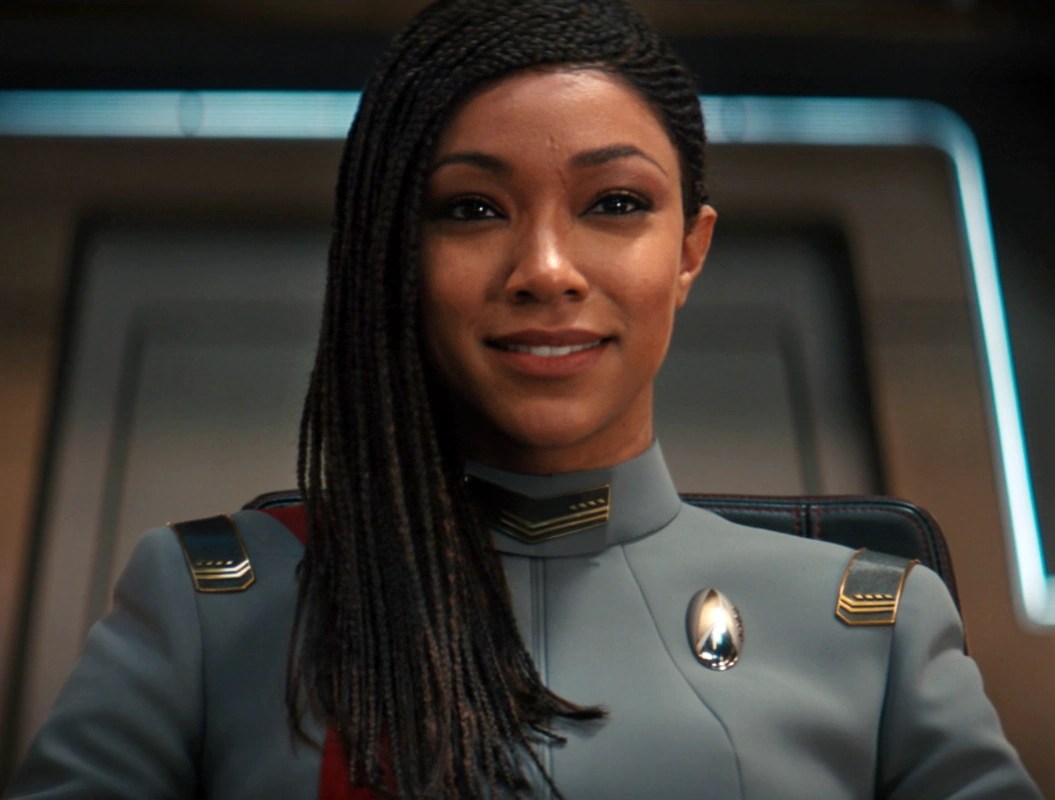
Burnham’s Captaincy Completed the Journey
Michael Burnham’s eventual rise to captain gave the series’ long arc its clearest expression.
The woman introduced after committing mutiny ultimately received command of the USS Discovery.
But the Burnham who reached the center chair wasn’t the same officer who had once believed she could make the correct decision for everyone around her.
She had experienced failure, exile, war, the Mirror Universe, loss and displacement across centuries.
She had learned that leadership wasn’t simply the ability to act.
Sometimes it meant listening.
Sometimes it meant trusting.
Sometimes it meant accepting that the people around her could see something she couldn’t.
Burnham’s command also arrived as the Federation itself began recovering. Worlds reconnected. Starfleet expanded its reach. Exploration gradually returned to an institution that had spent generations concentrating on survival.
The parallel was fitting.
Burnham rebuilt herself.
The Federation rebuilt itself.
And Discovery became the vessel carrying both transformations forward.
Discovery Rebuilt the Future by Remembering the Past
That is where Star Trek: Discovery occupies its most important place in the sixty-year story.
It began close to The Original Series, surrounded by familiar pieces of Star Trek history.
Sarek.
Spock.
Christopher Pike.
The Enterprise.
Then it abandoned the safety of everything audiences already knew and traveled farther into the future than any Star Trek television series had gone before.
What it found wasn’t utopia.
It found the consequences of history.
Civilizations had separated. Starfleet had diminished. The Federation’s promise had become something remembered more easily than practiced.
But the future wasn’t lost.
It needed rebuilding.
That makes Discovery an essential chapter in the institutional journey running across these series.
The Next Generation showed the Federation in confidence.
Deep Space Nine tested it through conflict.
Voyager carried it through isolation.
Discovery found it after collapse and helped begin its reconstruction.
And perhaps that was the point of sending a crew from the past so far into the future.
They arrived believing they had lost everything.
Instead, they discovered that what they carried mattered.
Not simply advanced technology.
Not the spore drive.
Not knowledge of history.
They carried a belief that civilizations separated by distance, fear and history could still choose to build something together.
The Federation had once represented that possibility.
Now it had to earn it again.
Discovery didn’t travel into the future merely to see what came next.
It went there to help make the future possible again.
Continue the Voyage
← Previous: Enterprise: Before the Federation
Explore the Hub: Star Trek 60 | Celebrating 60 Years of the Final Frontier
Upcoming → Burnham & Saru: The Heart of Discovery | September 16
TheFilmGordon’s Star Trek 60 celebration continues throughout September with new stories exploring the voyages, captains, crews, starships, worlds, adversaries and ideas that have shaped the Final Frontier.
Discover more from FilmGordon
Subscribe to get the latest posts sent to your email.