by Tim Gordon
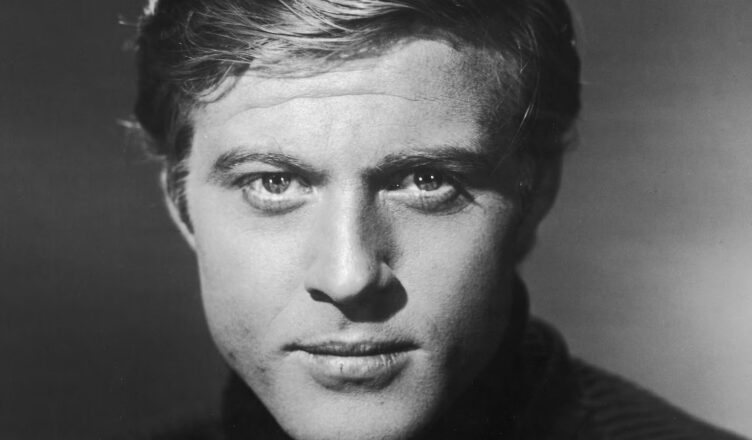
The world of cinema lost one of its true giants this week with the passing of Robert Redford at the age of 89. Actor, director, producer, activist, and visionary, Redford was a rare figure who not only defined Hollywood stardom in his era but also reshaped the art form for generations to come.
His career was filled with unforgettable performances, his directorial work revealed a profound sensitivity, and his founding of the Sundance Institute created a revolution in independent film that continues to reverberate today. For those of us who have dedicated our lives to film, Redford’s influence is deeply personal.
Redford’s beginnings were modest. Born in Santa Monica, he pursued painting before discovering acting, cutting his teeth on stage and in television with appearances on Alfred Hitchcock Presents and The Twilight Zone. On Broadway, his turn in Neil Simon’s Barefoot in the Park (1963) introduced audiences to his charm and wit. When the play was adapted for film four years later, he delivered one of his most enduringly romantic lines:
“I love you, Corie. Even when I didn’t like you, I loved you.”
By 1969, Redford was a household name. Butch Cassidy and the Sundance Kid paired him with Paul Newman in one of the most beloved buddy films ever made. As the Sundance Kid, he gave Newman’s Cassidy the immortal tease:
“You just keep thinkin’, Butch. That’s what you’re good at.”
It was a role that would stay with him forever, not just a character, but a spirit of independence that he carried into every stage of his career.
Few actors ever dominated a decade the way Redford owned the 1970s. He starred in a remarkable run of films that combined intelligence, star power, and social relevance: Jeremiah Johnson (1972), The Candidate (1972), The Sting (1973), The Way We Were (1973), The Great Gatsby (1974), Three Days of the Condor (1975), and All the President’s Men (1976).
At his peak, Redford’s blond hair, boyish grin, and easy charisma made him a sex symbol. The BBC praised his “all-American good looks,” and the Associated Press said he was “the most desired of leading men.” But Redford rejected the label. “Glamour image can be a real handicap. It is crap,” he told The New York Times in 1974. For him, it was always about the work.
In 1980, Redford made his directorial debut with Ordinary People, a searing portrait of grief and fractured families. The film swept the Oscars, earning him Best Director and proving he was as skilled behind the camera as in front of it.
His directing career unfolded with thoughtful, humanist dramas like A River Runs Through It (1992), Quiz Show (1994), and The Horse Whisperer (1998). In The Natural (1984), his Roy Hobbs summed up the kind of hard-won wisdom that defined Redford’s characters:
“I guess some mistakes you never stop paying for.”
If his acting made him a star, Sundance made him a revolutionary. In 1981, Redford founded the Sundance Institute and later the Sundance Film Festival. What began as a small gathering in Utah grew into the most important independent film festival in the world.
Sundance became the launching pad for generations of filmmakers, including Steven Soderbergh, Quentin Tarantino, Ryan Coogler, Ava DuVernay, and so many more. Variety remembered him as a “godfather for independent film.” Ron Howard called him an “artistic gamechanger.”
For me, this is where Redford’s legacy touches my own. As someone who created a film festival of my own, I understand the courage, vision, and persistence it takes to build a space where stories can live and artists can be heard. Without Redford, there would be no blueprint for what a modern festival could be. His vision for Sundance didn’t just influence the industry; it helped shape the very path that allowed me to create a platform to elevate filmmakers and their work.
Beyond film, Redford was a lifelong activist. He championed conservation, Indigenous rights, and LGBTQ+ equality. Time praised him as “fiercely dedicated to pushing for a world that was habitable for all.” Barack Obama, awarding him the Presidential Medal of Freedom in 2016, called him “one of the foremost conservationists of our generation.”
For Redford, art and activism were inseparable. Both demanded courage, both demanded truth.
Redford aged with grace, continuing to test himself as an actor. Indecent Proposal (1993) gave him one of his most notorious lines:
“Suppose I were to offer you $1 million for one night with your wife.”
He delivered a near-wordless tour de force in All Is Lost (2013), and his career came full circle with The Old Man & the Gun (2018), a charming swan song that reminded us of the spark that made him an icon in the first place.
He even left his mark on a new generation by joining the Marvel universe in Captain America: The Winter Soldier (2014) and Avengers: Endgame (2019).
Following his death, tributes poured in. The Guardian hailed him as “a giant of American cinema.” The Hollywood Reporter called him “one of the few truly iconic screen figures of the past half-century.” The Los Angeles Times remembered him as a “generational icon.” France’s culture minister praised him as “a giant of American cinema.”
For me, Redford’s greatness lies not only in his films but in the choices he made. He could have coasted on looks and stardom, but instead he pushed for films with cultural weight—stories about corruption, grief, love, and survival. Through Sundance, he gave countless others the chance to tell their stories, too.
As the founder of the LightReel Film Festival, I know firsthand the challenges and triumphs of building a platform for filmmakers. Redford’s creation of Sundance gave me—and so many others—a roadmap. His belief in the power of independent cinema continues to inspire the work we do every day, reminding us that festivals are more than showcases; they are movements.
Redford was the Sundance Kid, the Golden Boy of Hollywood, and the godfather of independent film. He was also one of the last great movie stars, a man who changed cinema forever.
Robert Redford: Forever the Sundance Kid. Forever a revolutionary spirit in film.
Discover more from FilmGordon
Subscribe to get the latest posts sent to your email.