

by TheFilmGordon Staff
Black New York films have captured generations of life across New York City, transforming its streets, neighborhoods, institutions, and five boroughs into essential landscapes of Black cinema. This 28-film cinematic journey explores how Black filmmakers, performers, and characters have shaped the identity of one of the world’s great movie cities.
Moving across the city allows the Black New York films to reveal how geography influences identity, opportunity, community, and power.
28 Films. 28 Days. One City in Motion.
New York has always belonged to cinema. But cinema has never experienced New York in only one way.
That relationship has been formally recognized by institutions such as the Museum of Modern Art, whose Made in NY film series celebrated the enormous contribution New York filmmaking has made to modern American cinema.
For generations, the city has represented arrival and escape, ambition and disappointment, wealth and survival, isolation and community. Its avenues can promise reinvention while its institutions determine who gets access to that promise. Its neighborhoods preserve memory even as the city surrounding them changes.
For Black filmmakers and performers, those contradictions have provided extraordinary territory for storytelling.
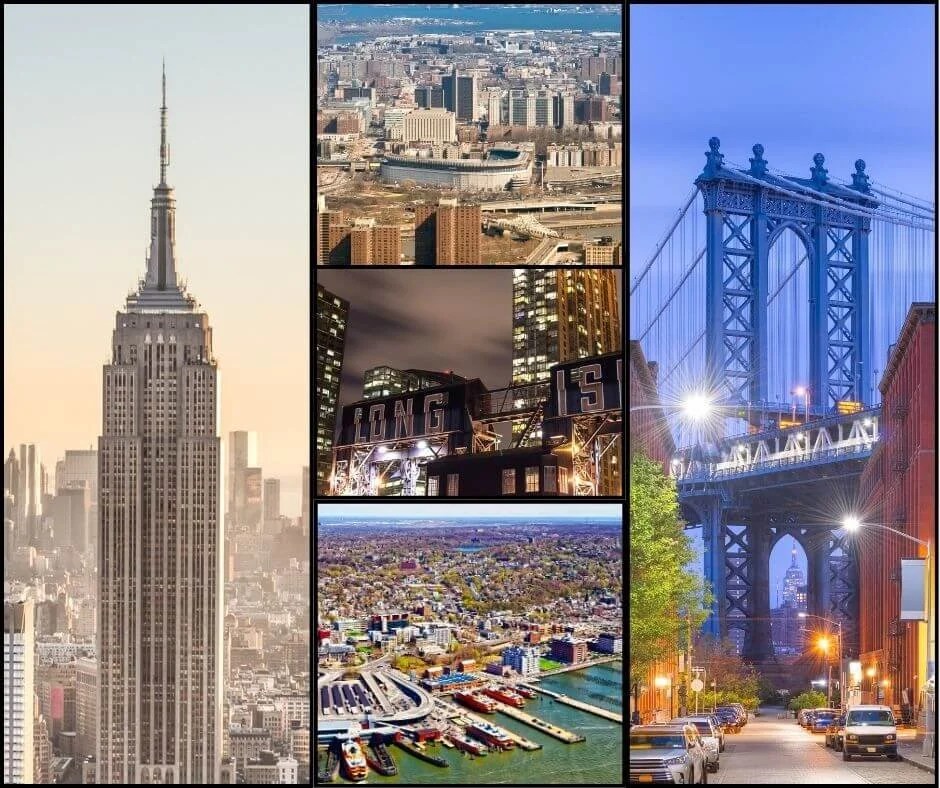
From Harlem to Brooklyn, from the Bronx to Queens, and across Manhattan and the wider city, Black cinema has transformed New York into something far greater than a backdrop.
The city becomes an engine.
Together, these Black New York films reveal a city whose identity changes depending on who holds the camera and whose story occupies the frame.
A pressure point.
A witness.
And sometimes, an adversary.
Why Black New York Films Matter
Black New York was created to examine that relationship through 28 films spanning generations, genres, neighborhoods, and cinematic movements.
These films explore romance and rebellion, family and ambition, crime and enterprise, art and identity, institutions and resistance, isolation and belonging. Some unfold on crowded streets. Others find their New York inside apartments, nightclubs, basketball courts, offices, subway cars, churches, and neighborhood gathering places.
What connects them is not simply geography.
Each understands that where a story happens can shape what that story means.
New York applies pressure. Characters respond. Sometimes they conquer the city. Sometimes they are consumed by it. Sometimes survival itself becomes victory.
That relationship is the heartbeat of Black New York.
28 Films, Not a Ranking
This is not a countdown.
It is not a list of the “28 greatest” Black films set in New York. It is not chronological, and it was never designed as a syllabus.
Black New York is curated as a journey.
One film may examine authority and the institutions governing everyday life. Another may move toward romance and interior experience. The next might enter the worlds of music, basketball, organized crime, family, entrepreneurship, or cultural revolution.
The shifts are intentional.
The Black New York films were selected to create those shifts, allowing different generations, genres, and neighborhoods to illuminate one another.
Each film changes the temperature of the journey while revealing another dimension of the city.
Seen individually, they are stories.
Seen together, they become a map.
Five Boroughs, Generations of Black Cinema
The journey moves block by block and borough by borough.
Harlem emerges repeatedly as a center of Black enterprise, culture, political power, criminal ambition, and reinvention.
Brooklyn becomes a landscape of family, community, creativity, desire, basketball, memory, and consequence.
Few filmmakers have explored that relationship more consistently than Spike Lee, whose Brooklyn films range from Do the Right Thing to the deeply personal Crooklyn. MoMA describes Crooklyn as Lee’s childhood memoir of growing up in Fort Greene.
The Bronx pulses with cultural invention and the ability to create something new from what others have overlooked.
Queens becomes a territory of arrival, aspiration, identity, and transformation.
Manhattan reveals another New York, where institutions, commerce, isolation, opportunity, and power intersect.
But the borders are never absolute.
Characters move. Cultures travel. Music crosses bridges. Ambition rides the subway.
The city is always in motion.
The Gotham Modes
Geography tells us where we are.
The Gotham Modes help explain what forces are operating there.
Each film is connected to a thematic mode that allows movies separated by decades and genres to enter into conversation:
Authority & Institutions examines systems of control and the people navigating them.
Existence & Isolation turns inward, exploring identity, loneliness, intimacy, and survival.
Culture & Creation follows the spaces where Black expression becomes art, language, music, style, and movement.
Power & Enterprise examines ambition, money, ownership, crime, influence, and the pursuit of control.
Community & Memory considers family, neighborhoods, history, belonging, and what communities preserve.
Reckoning & Legacy confronts consequence, inheritance, accountability, and what one generation leaves for the next.
The city changes from film to film.
The questions echo.
Through the Black Reel Lens
The project is also connected to the legacy and values of the Black Reel Awards.
Although the awards were established in 2000, many of the films explored throughout Black New York embody the artistic principles the organization would eventually celebrate: bold authorship, transformative performances, cultural impact, innovation, and consequence.
Many of these Black New York films anticipated the values the Black Reel Awards would later recognize, preserving generations of Black artistry before that excellence received sufficient institutional attention.
That lineage matters.
Black cinematic excellence did not suddenly appear when institutions began recognizing it. Generations of filmmakers, actors, writers, craftspeople, and independent artists had already been creating work worthy of preservation, criticism, celebration, and serious historical consideration. The Museum of Modern Art has itself documented this history through exhibitions devoted to early African American independent cinema.
Black New York places those generations beside one another.
Sidney Poitier and Denzel Washington.
Abbey Lincoln and Spike Lee.
Harlem gangsters and Brooklyn dreamers.
Artists, hustlers, lovers, musicians, athletes, families, outsiders, survivors.
Different eras. Different New Yorks.
One evolving cinematic inheritance.
More Than 28 Films
The 28 films are the spine of the project, but Black New York extends beyond the daily essays.
The City in Motion maps the journey geographically, revealing how the films move across New York.
Explore by Borough allows audiences to experience the collection through place.
The Gotham Modes reorganize the journey around ideas rather than geography.
Black New York: The Playlist responds to the films through hip hop, pairing 28 movies with 28 songs to create another journey through the city.
The Poster Gallery brings the collection together visually, allowing decades of Black filmmaking and movie iconography to share the same wall.
Together, these elements transform the project from a collection of articles into a cinematic archive.
A Living Archive of Black New York
Originally conceived as a Black History Month journey, Black New York was never intended to disappear when February ended.
The 28-day structure gave the project its rhythm.
The archive gives it permanence.
That permanence allows the Black New York films to remain in conversation long after the original 28-day journey ends.
Return through a different borough. Follow a Gotham Mode instead of the original order. Revisit a familiar film beside one made decades earlier. Listen to the playlist while exploring the map. Discover connections that were invisible when the films stood alone.
Because there is no single Black New York.
There are generations of them.
There is the city of ambition and the city of consequence. The city of romance and the city of rebellion. The city that welcomes you, the city that tests you, and the city that forces you to decide who you are going to become.
Twenty-eight films cannot contain all of it.
But together, they reveal something extraordinary:
Black cinema has not simply documented New York. It has helped define how the world sees it.
So lace up your Timbs.
Ride the subway lines of memory. Walk the Harlem avenues of ambition. Turn the Brooklyn corners of consequence. Feel the Bronx pulse with invention. Step into Queens and claim your name.
Welcome to Black New York.
28 Films. 28 Days. One City in Motion.
Discover more from FilmGordon
Subscribe to get the latest posts sent to your email.


